Wayground is an education platform helping teachers and school admins drive student outcomes with tools to create content like assessments & lessons, track student understanding, content libraries and more.
Problem statement
We have been adding various question types that appear in US state tests to our assessments tool to strengthen our key moat - help districts prepare students for state tests while giving teachers and students a more engaging classroom experience.
Hot text is a common question type on English US state tests, and we needed to add support for it.
How Hot text works
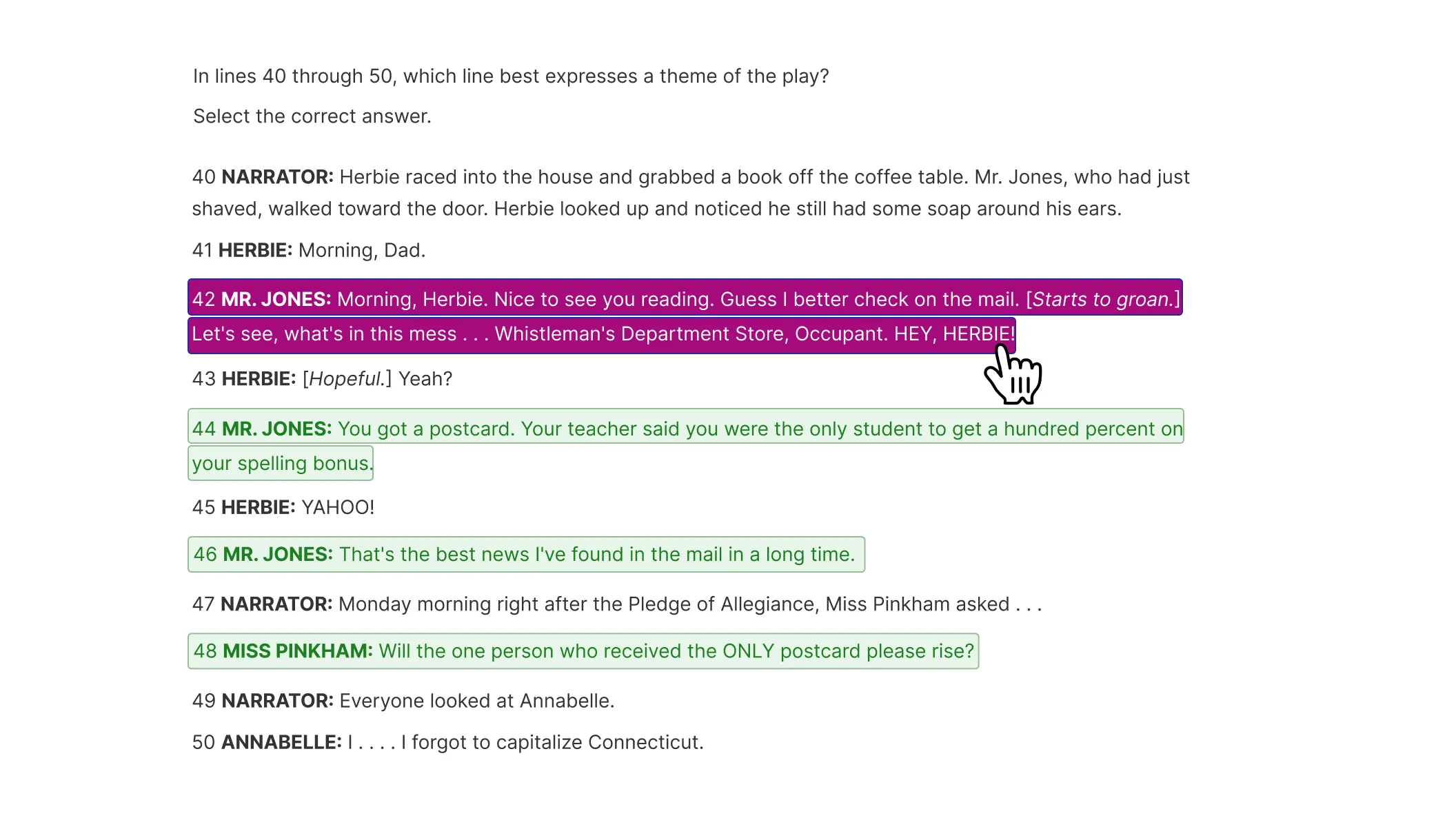
Hot text is simple - students select specific words, phrases, or sentences from a provided text to answer a question. It's basically prettier MCQs.
Hot text UI from California's CAASP state test
Making Hot text fun
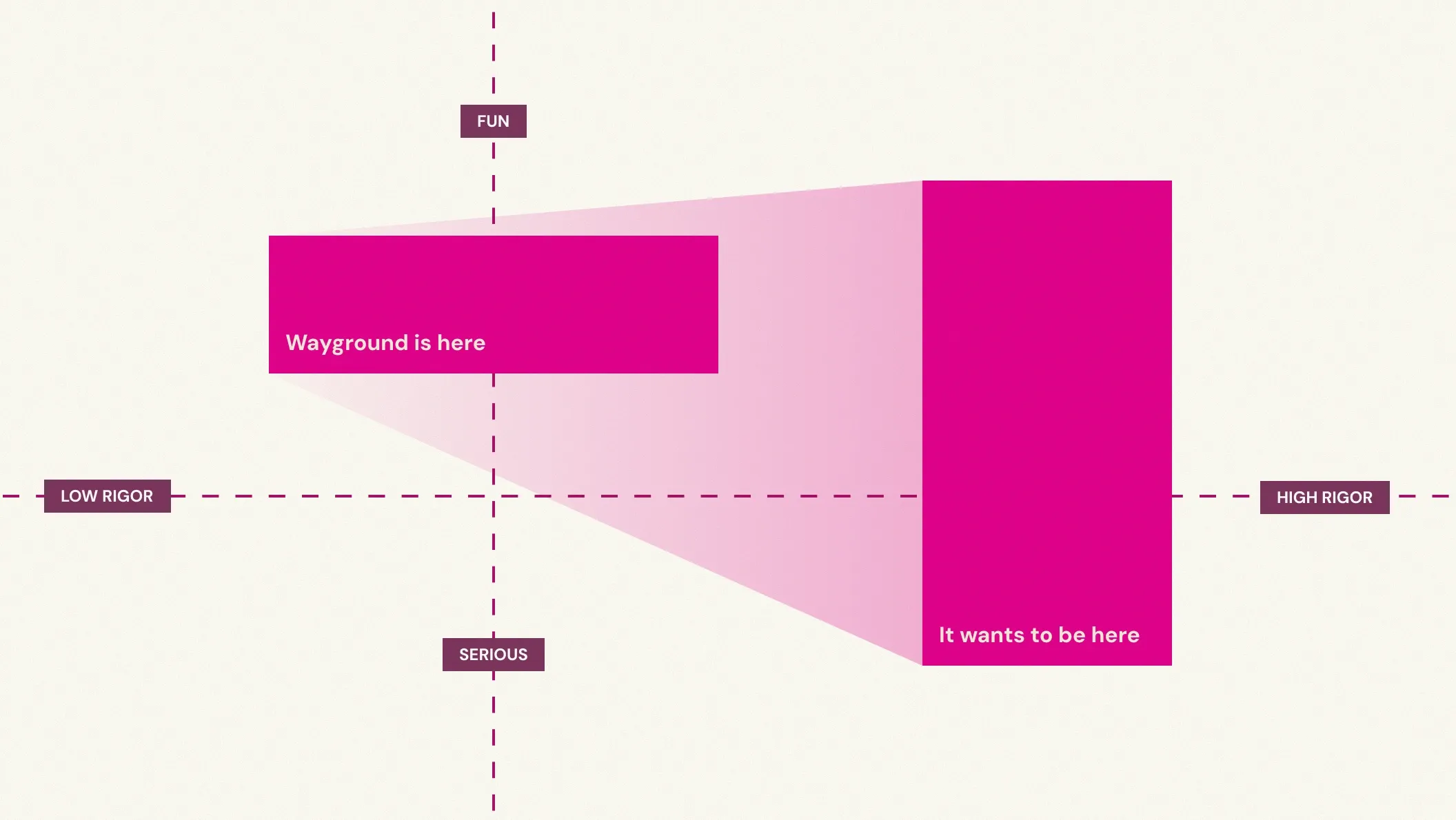
We wanted Wayground’s Hot text to be visually engaging and fun for students without losing functional parity with state tests.
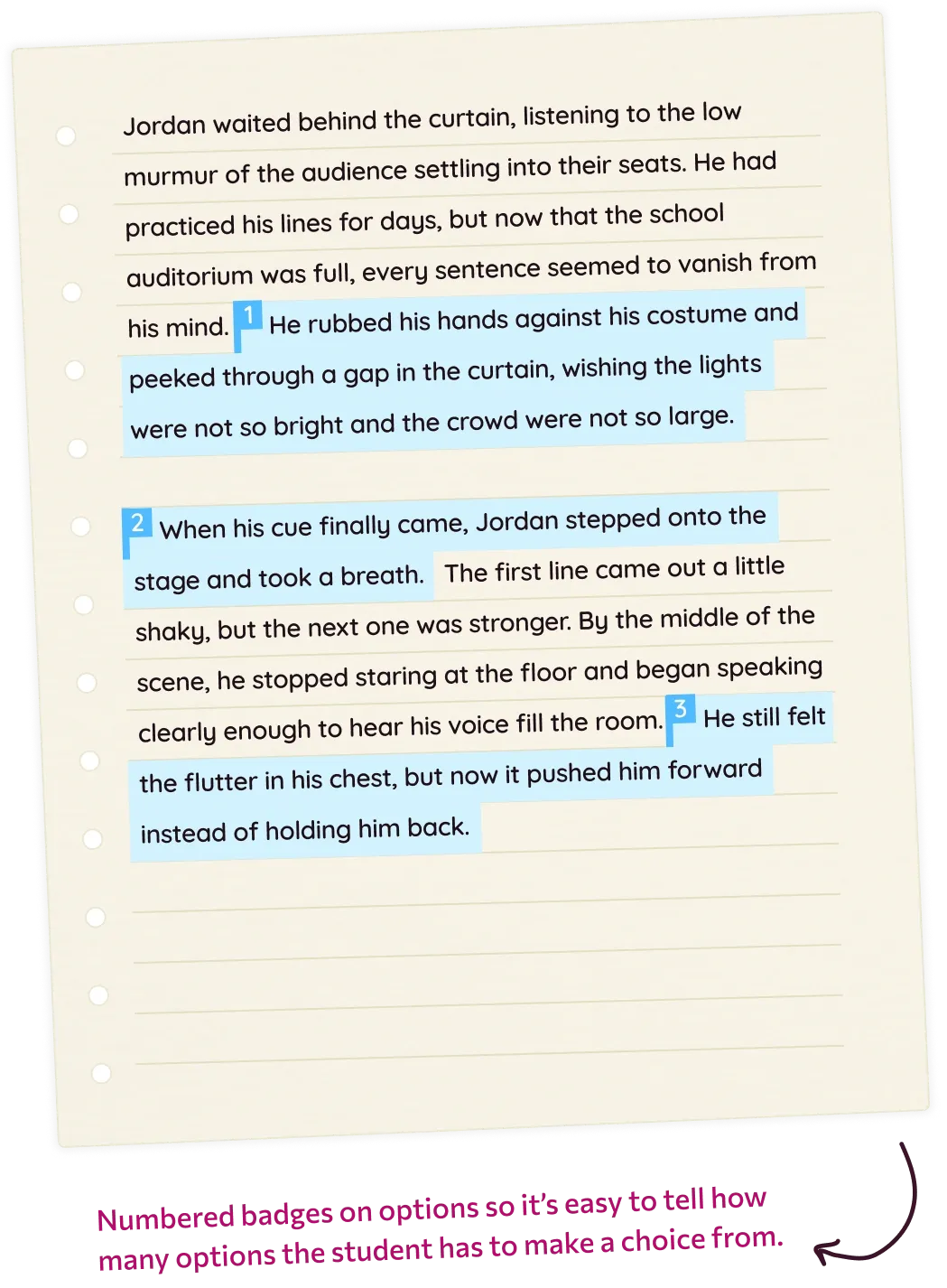
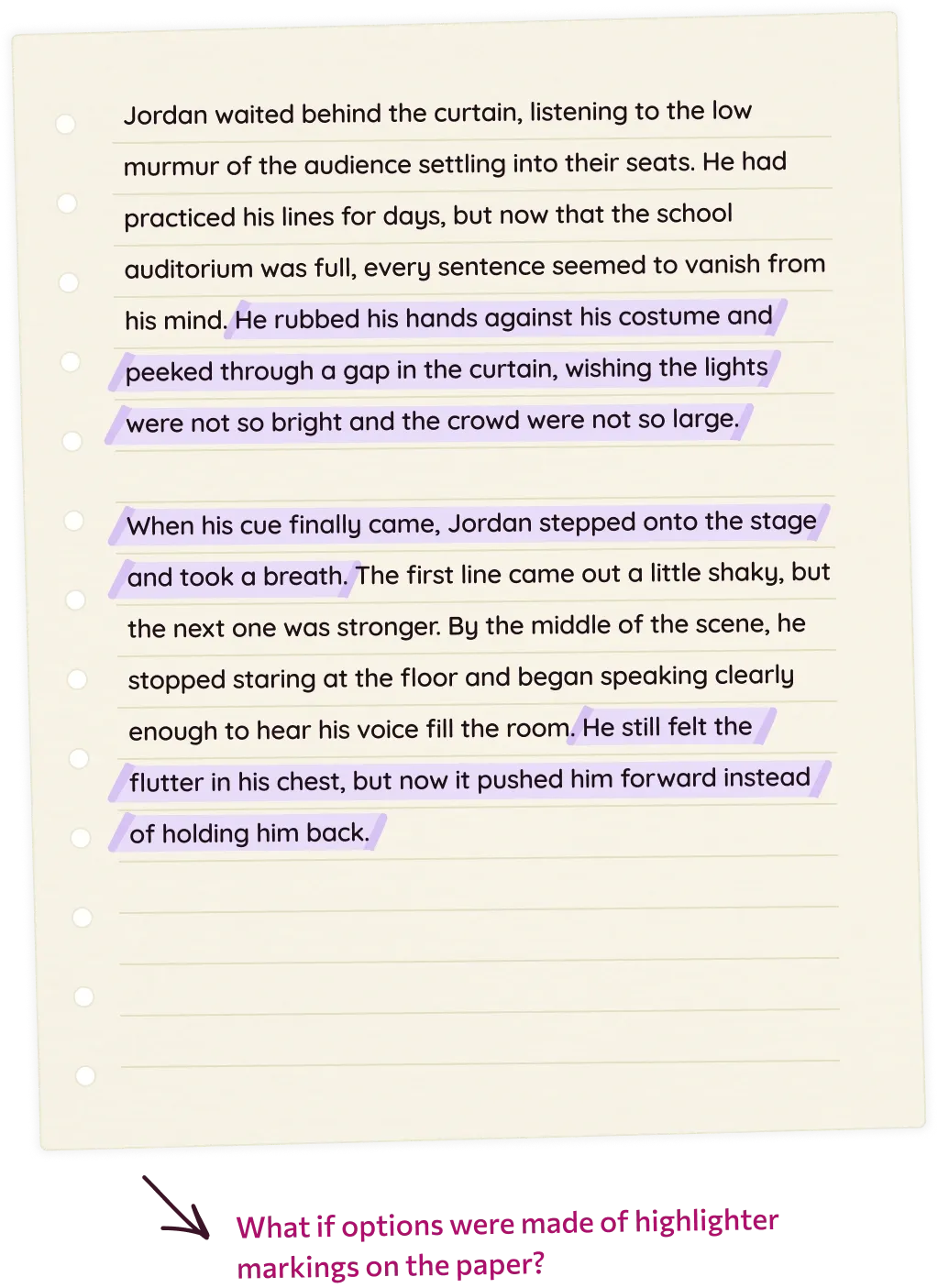
I iterated over a variety of approaches before landing on “paper with highlighter markings as options” metaphor. This evoked a feeling a tangibility and playfulness that the team liked.
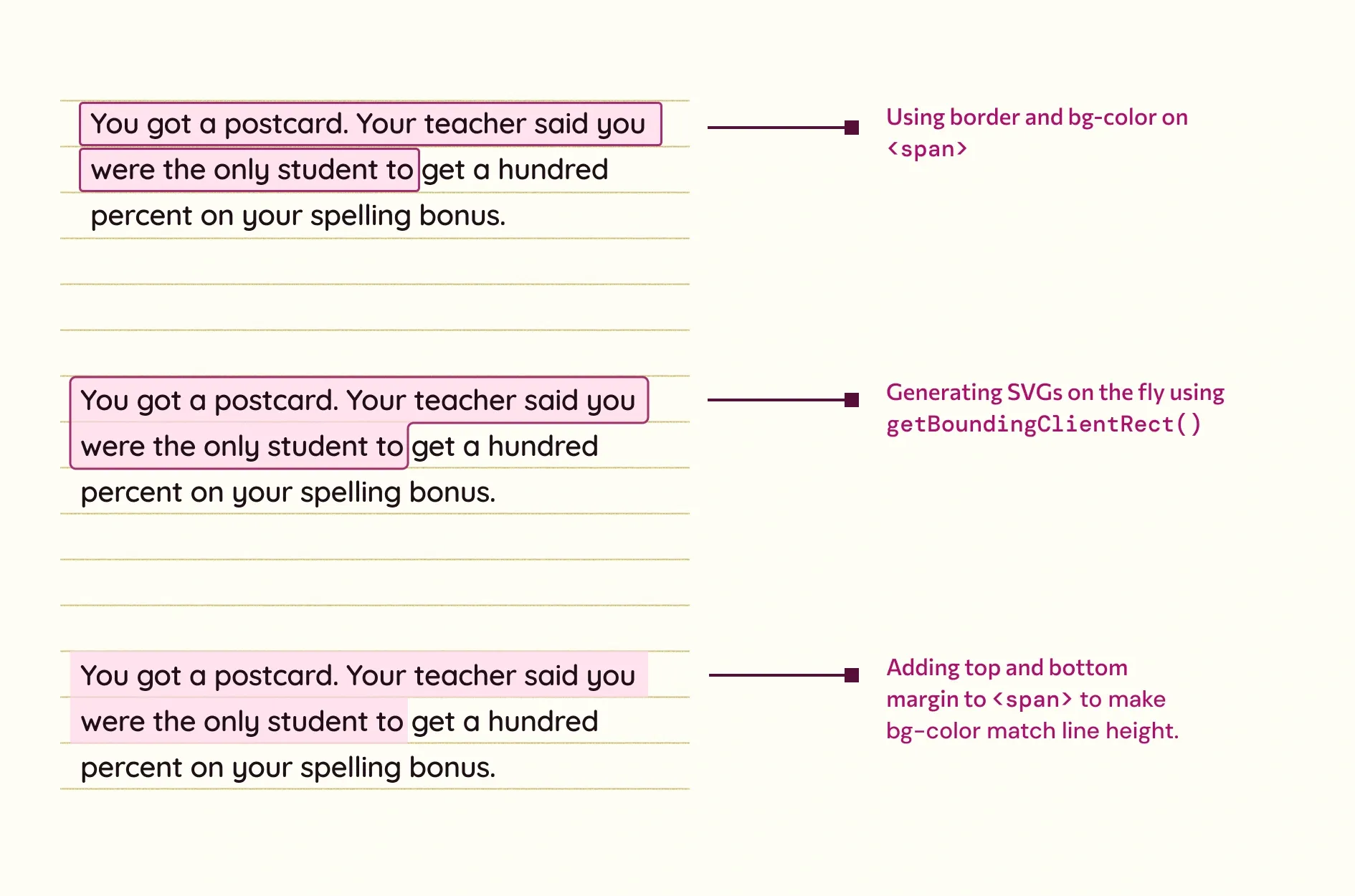
There are several ways to create highlights in code as shown below.
Although elegant, we didn't go down the dynamic SVG route as we didn't want to ship client-side code for generating SVGs.
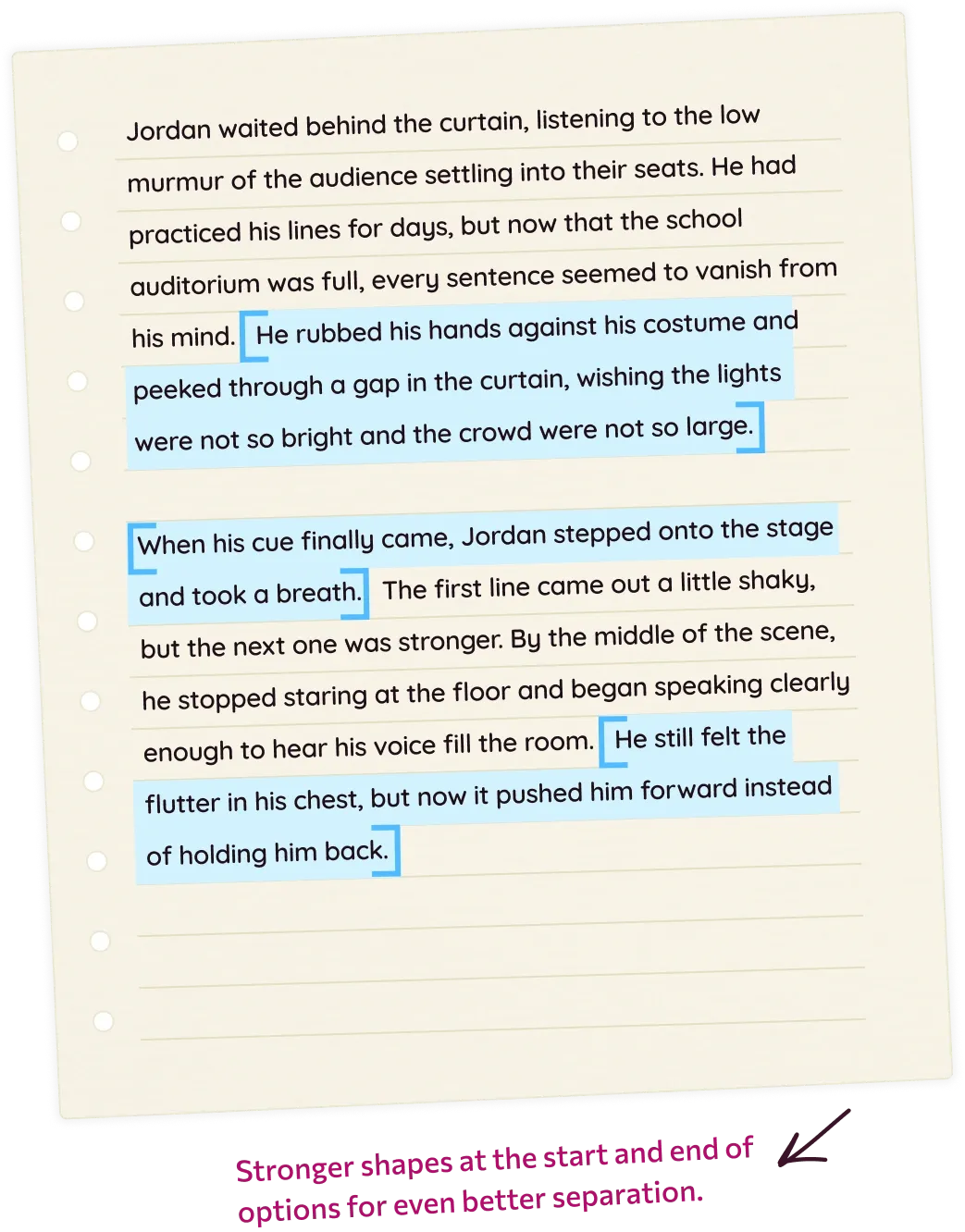
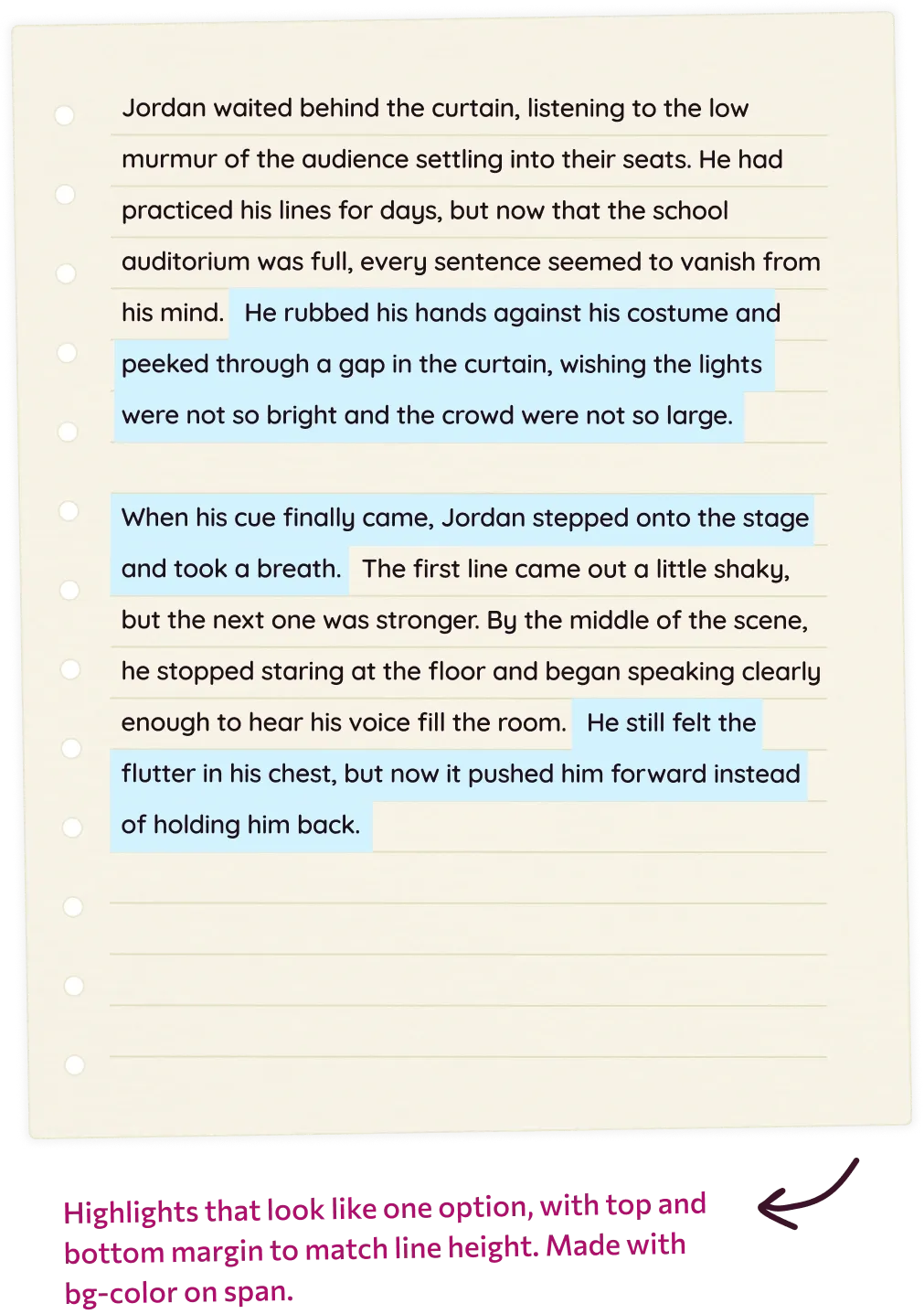
To make highlight options look like one cohesive entity, one of the ideas was to add a border around the highlight options with some softness through corner radius.
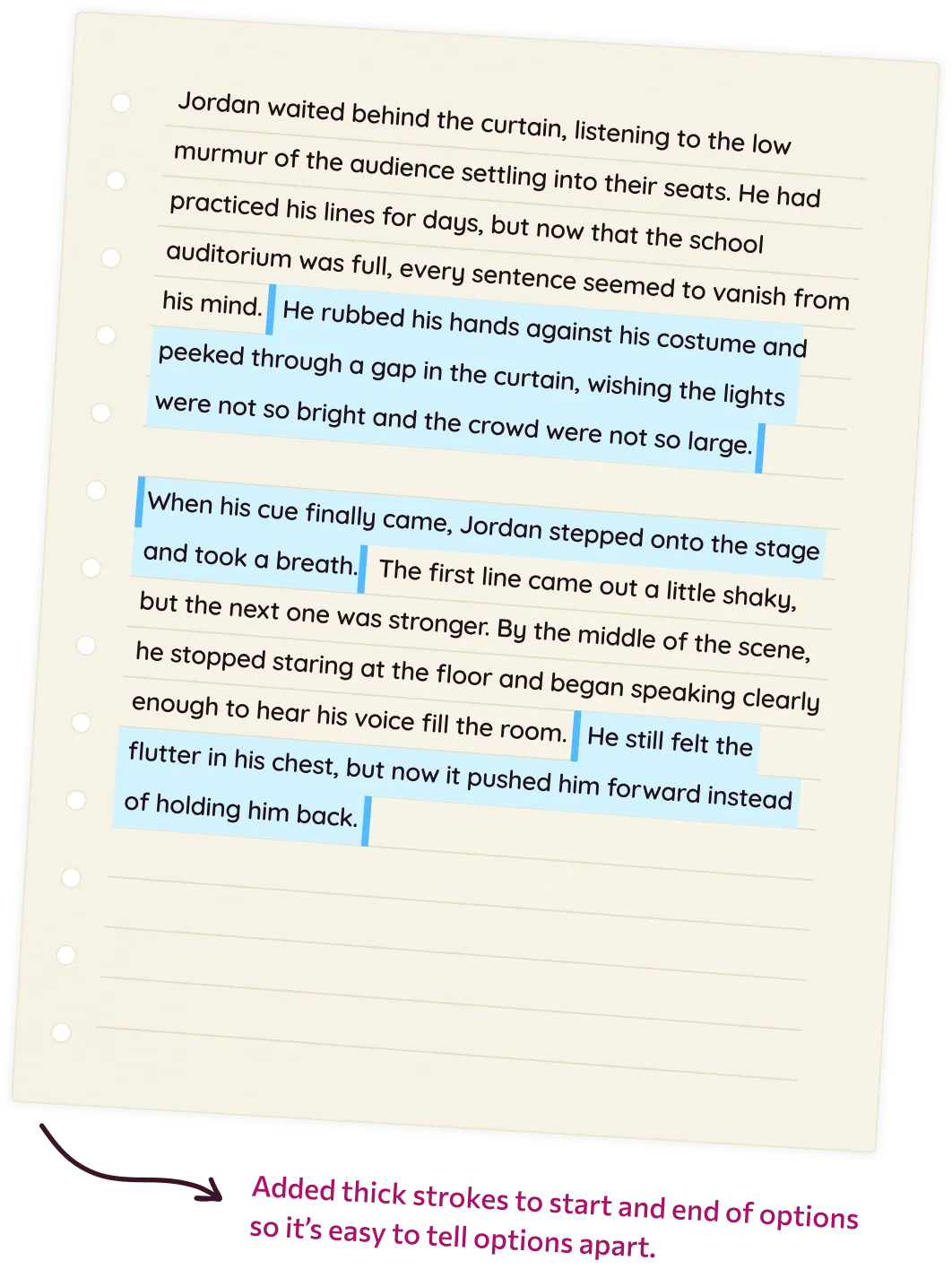
The border would create separation that would help students differentiate between two consecutive sentence options. This is a common scenario in state tests’ hot text where almost everything is an option.
Below is a code snippet that dynamically creates SVG bounding boxes with border for any piece of text within a paragraph. Codepen link to prototype here.
<script>
     function drawPolygonHighlights() {
       const container = document.getElementById("text-wrapper");
       if (!container) return;

       container
         .querySelectorAll(".highlight-polygon-svg")
         .forEach((el) => el.remove());

       const spans = container.querySelectorAll("[data-highlight]");
       if (!spans.length) return;

       const containerRect = container.getBoundingClientRect();

       spans.forEach((span) => {
         const range = document.createRange();
         range.selectNodeContents(span);
         const rects = range.getClientRects();
         if (!rects.length) return;

         const paddingX = 6;
         const paddingY = 4;

         // Normalise rects to container coordinates
         const boxes = Array.from(rects).map((r) => ({
           left: r.left - containerRect.left - paddingX,
           right: r.right - containerRect.left + paddingX,
           top: r.top - containerRect.top - paddingY,
           bottom: r.bottom - containerRect.top + paddingY,
         }));

         // Sort top -> bottom
         boxes.sort((a, b) => a.top - b.top);

         const n = boxes.length;
         const first = boxes[0];

         let d = "";

         // --- TOP / RIGHT STAIRCASE ---

         // Start at top-left of first line
         d += `M ${first.left} ${first.top}`;
         // Along top of first line
         d += ` L ${first.right} ${first.top}`;

         // For each subsequent line, step down/right following the outer boundary
         for (let i = 1; i < n; i++) {
           const prev = boxes[i - 1];
           const cur = boxes[i];

           // Down from previous top to this line's top at old right edge
           d += ` L ${prev.right} ${cur.top}`;
           // Then horizontally to this line's right edge
           d += ` L ${cur.right} ${cur.top}`;
         }

         const last = boxes[n - 1];

         // Down the right edge of the last line
         d += ` L ${last.right} ${last.bottom}`;

         // --- BOTTOM / LEFT STAIRCASE ---

         // Along bottom of last line to its left edge
         d += ` L ${last.left} ${last.bottom}`;

         // Walk back up through lines, stepping at left edges
         for (let i = n - 1; i > 0; i--) {
           const cur = boxes[i];
           const prev = boxes[i - 1];

           // Up from this line's bottom to previous line's bottom at same left
           d += ` L ${cur.left} ${prev.bottom}`;
           // Then along previous line's bottom to its left edge
           d += ` L ${prev.left} ${prev.bottom}`;
         }

         // Close back to starting top-left
         d += ` Z`;

         const svgNS = "http://www.w3.org/2000/svg";
         const svg = document.createElementNS(svgNS, "svg");
         svg.classList.add("highlight-polygon-svg");

         const path = document.createElementNS(svgNS, "path");
         path.setAttribute("d", d);
         path.setAttribute("fill", "rgba(184, 218, 255, 0.9)");
         path.setAttribute("stroke", "#2b8cff");
         path.setAttribute("stroke-width", "3");
         path.setAttribute("stroke-linejoin", "round");

         svg.appendChild(path);
         container.appendChild(svg);
       });
     }

     drawPolygonHighlights();
     window.addEventListener("resize", drawPolygonHighlights);
   </script>
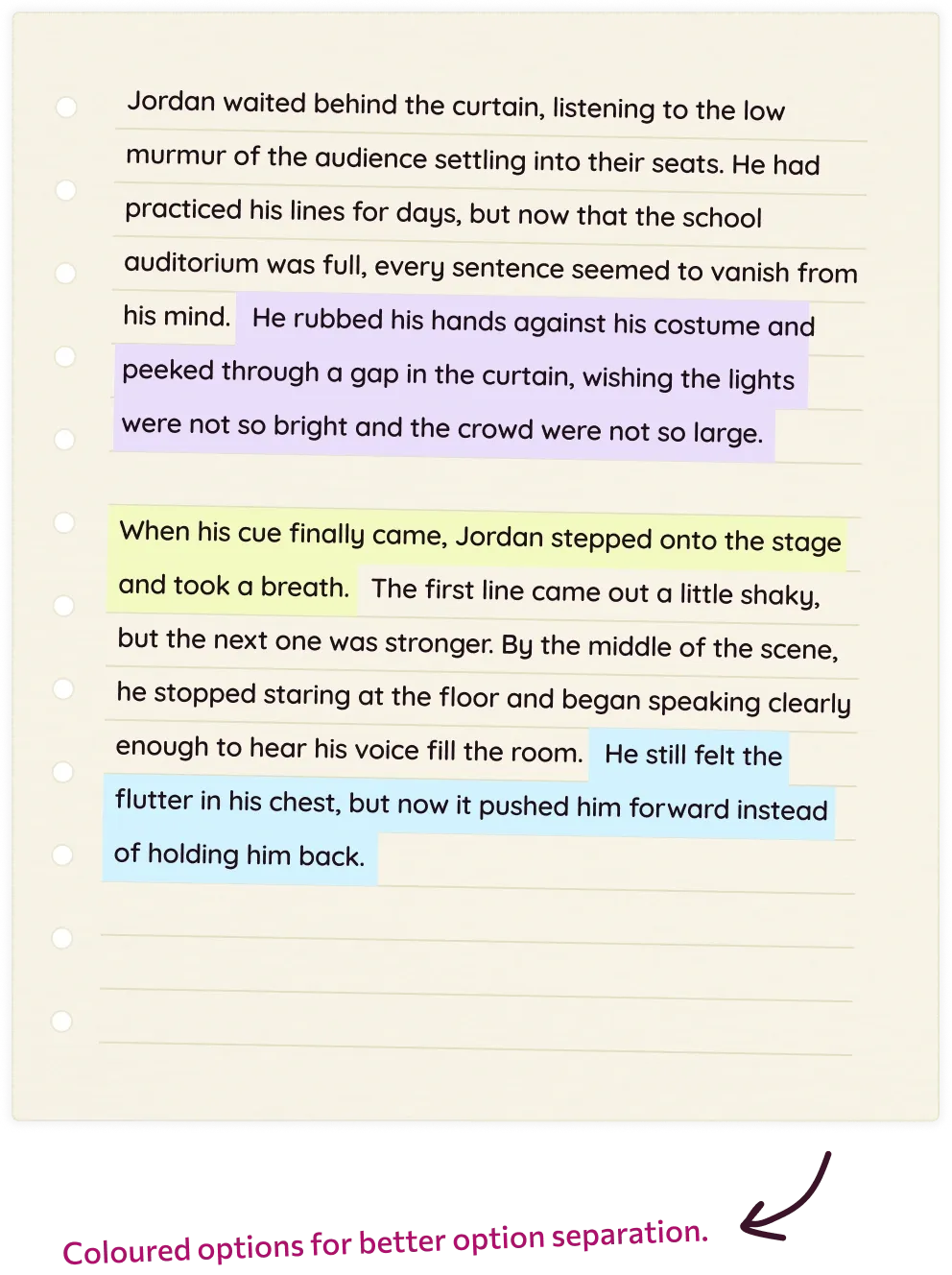
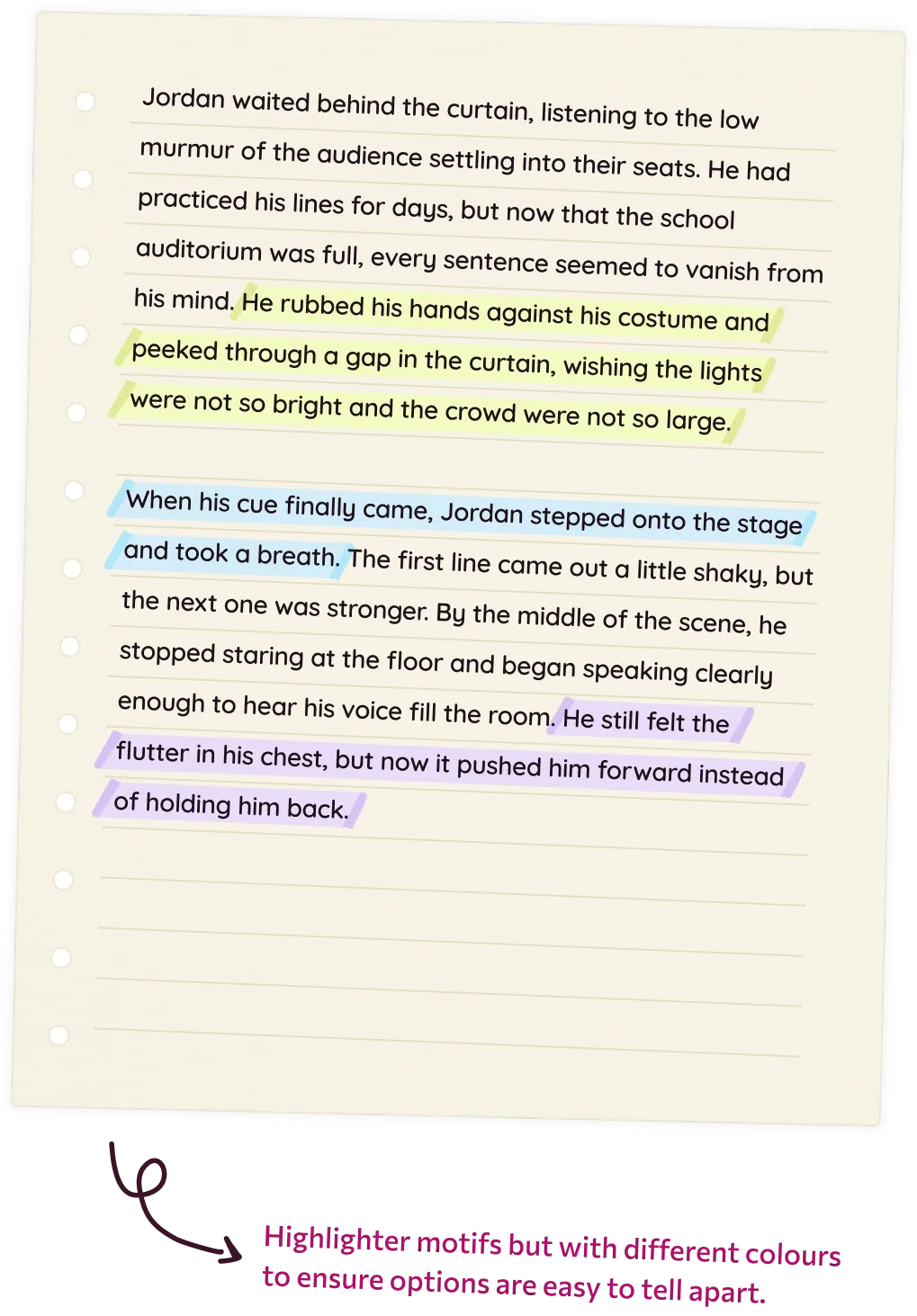
I tried other ideas, what if highlights were literally highlighter pen markings? How will highlights work if two sentence options are adjacent and close to each other?
Below are some of the highlighter style experiments that I tried.
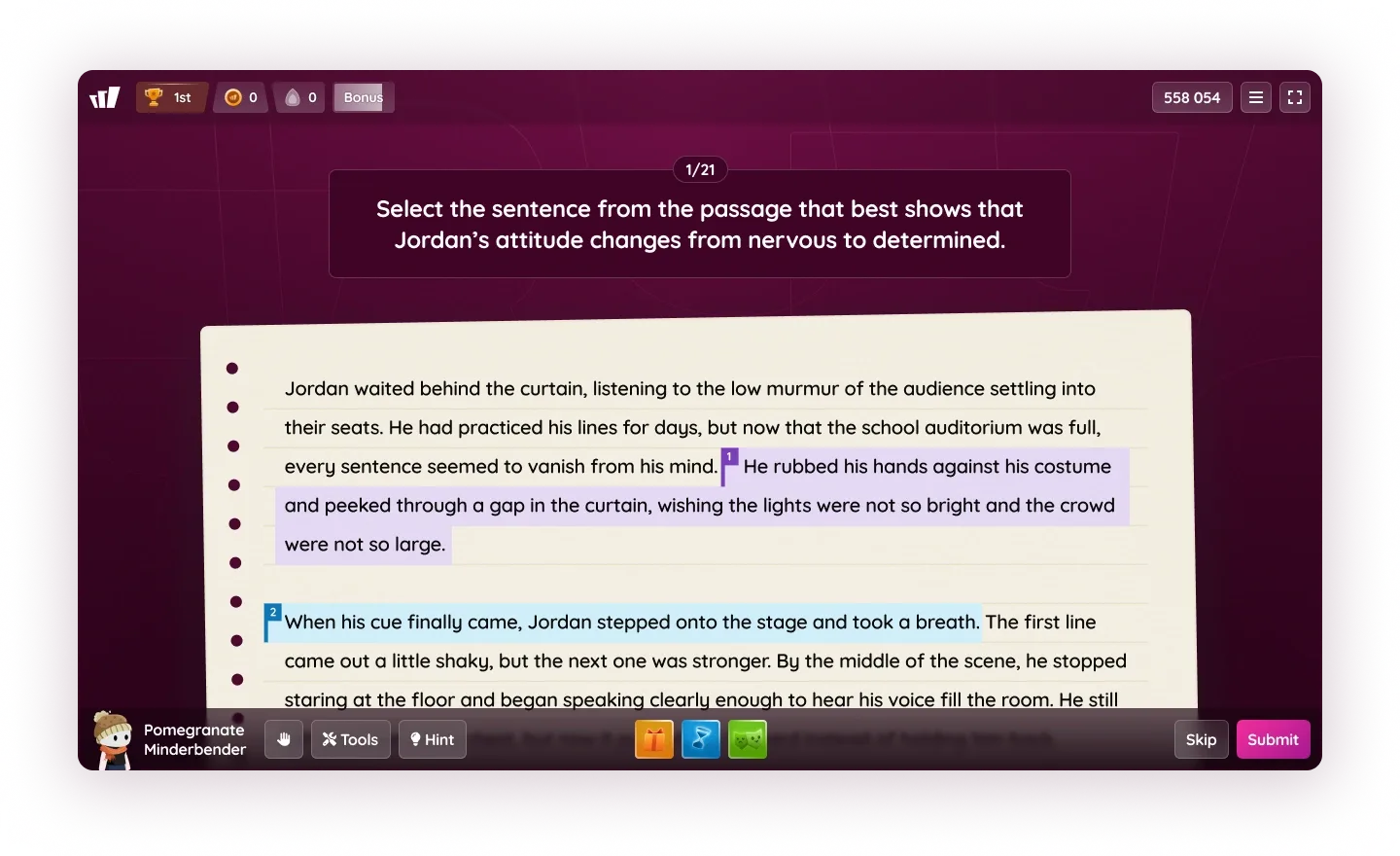
We eventually chose highlights made with different bg-color on a span, with numbered markings at the start of the highlight for easy reference.
Student gameplay experience with the final highlighter UI style
Impact
Most teachers in the US are slow adopters of new capabilities. Feature work takes time to mature. For question types, we stopped tracking adoption metrics early in the release cycle and focus on CSAT scores to make iterative improvements.
As I am writing this, Hot text has a CSAT of 4.2/5. This case study is a basic overview, not an end-to-end deep dive.